Decoding OD, OS, and OU: Understanding Your Glasses Prescription
Introduction
When you receive a glasses prescription from your eye care professional (an optometrist or ophthalmologist), you may notice abbreviations like OD, OS, and OU. These terms are must-have for understanding how your lenses are tailored to your vision needs. This handbook will break down what they mean, why they matter, and how to read your prescription accurately.
Breaking Down OD, OS, and OU
OD (Oculus Dexter) – Right Eye
-
Meaning: OD stands for "Oculus Dexter," which refers to the right eye.
-
How it appears on a prescription: Typically listed first, indicating the prescription details for the right eye.
-
Why it matters: Each eye may have different vision needs, so separating OD and OS ensures accuracy in lens customization.
OS (Oculus Sinister) – Left Eye
-
Meaning: OS stands for "Oculus Sinister," referring to the left eye.
-
How it is used in vision prescriptions: Similar to OD, OS defines the specific correction required for the left eye.
-
Differences from OD: Many people have different prescriptions in each eye, which is why separate measurements are needed.
OU (Oculus Uterque) – Both Eyes
-
Meaning: OU stands for "Oculus Uterque," meaning both eyes.
-
When it’s used: In some cases, the same prescription applies to both eyes, making it easier to list as OU rather than OD and OS separately.
-
Typical scenarios: Some eye lens or reading glasses prescriptions use OU if the correction is identical for both eyes.
Understanding Additional Prescription Elements
Sphere (SPH) – Correcting Nearsightedness or Farsightedness
-
What it means: The sphere (SPH) value indicates the power of the lens in diopters (D).
-
Negative (-) values: Indicate nearsightedness (myopia), where distant objects appear blurry.
-
Positive (+) values: Indicate farsightedness (hyperopia), where close-up objects are blurry.
Cylinder (CYL) and Axis – Correcting Astigmatism
-
What CYL means: Measures the severity of astigmatism (an irregularly shaped cornea causing blurry vision).
-
Axis (0° to 180°): Indicates the direction in which the lens corrects the astigmatism.
-
Why it matters: Without proper CYL and Axis values, people with astigmatism will experience distorted vision.
Addition (ADD) – Presbyopia Correction
-
Purpose: ADD values are used for bifocal, trifocal, or progressive lenses to help with near vision.
-
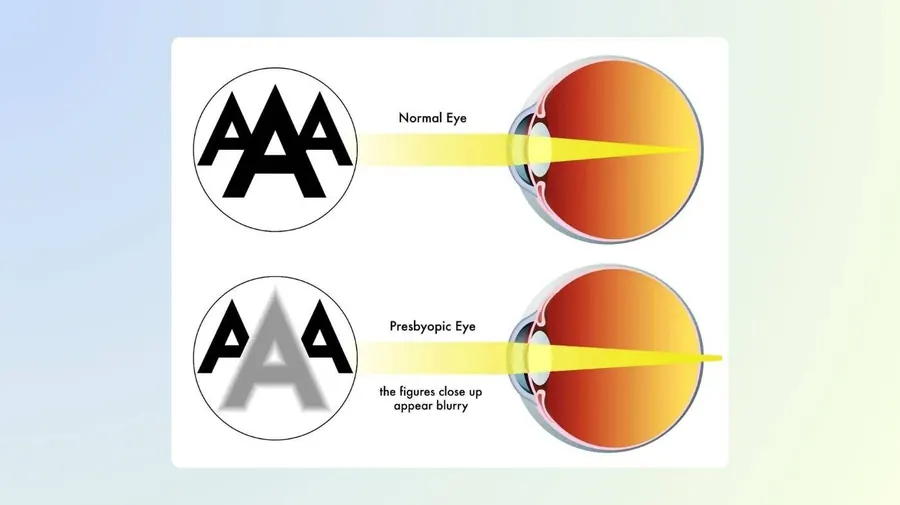
Typical for: Individuals over 40 who experience difficulty focusing on close-up objects due to presbyopia. Even young adults and children may have an ADD value on their prescription if they have difficulty with near vision.
Prism and Base – Correcting Eye Misalignment
-
What it means: Prism correction is used for conditions like strabismus (eye misalignment) to correct double vision.
-
Base direction: Indicated as Base Up (BU), Base Down (BD), Base In (BI), or Base Out (BO), defining how the prism shifts light for proper alignment.
Why Your Prescription Matters
Differences Between Glasses and Eye lens Prescriptions
-
Why they differ: Eye lenses sit directly on the eye, whereas glasses rest on the nose, requiring different curvature and power adjustments.
-
Key differences: Eye lens prescriptions include base curve (BC), diameter (DIA), and brand recommendations.
-
Importance of accuracy: Using a glasses prescription for contacts (or vice versa) can result in poor vision and discomfort.
How to Read Your Prescription Accurately
- Step-by-step handbook:
-
Locate OD, OS, or OU to know which eye the prescription refers to.
-
Identify the SPH (Sphere) value for nearsighted or farsighted correction.
-
Check for CYL and Axis if astigmatism correction is needed.
-
Search for ADD power if reading or multifocal lenses are required.
-
Identify any prism correction if prescribed.
- Where to discover your prescription: Usually provided on an optometrist’s printout or online optical retailer.
Typical Errors and How to Steer clear of Them
-
Misreading plus (+) and minus (-) signs: A +2.00 lens in the SPH (sphere) section corrects farsightedness, while a -2.00 lens in the SPH (sphere) section corrects nearsightedness.
-
Ignoring CYL and Axis: If you have astigmatism, double-check that your lenses include these values.
-
Mixing up OD and OS: At all times confirm which lens corresponds to which eye to steer clear of discomfort.
Final Pointers for Managing Your Prescription
-
Regular Eye Exams: Your vision can change over time, so it's crucial to have your prescription updated regularly.
-
Check for Errors: If your glasses don’t feel right, revisit your optometrist to confirm the accuracy of your prescription.
-
Consider Lens Coatings: Anti-glare, blue light filtering, and UV protection coatings can enhance comfort and eye health.
-
Explore Different Lens Types: Progressive lenses, bifocals, and high-index lenses offer different perks based on your needs.
Conclusion
Understanding OD, OS, and OU is key to ensuring your prescription glasses meet your vision needs. Whether you’re ordering eyewear online or discussing your prescription with an optometrist, knowing these terms helps you make informed choices. At all times double-check your prescription details, and if you have any doubts, consult your eye care provider for clarification.
Share Link copied! Tweet Share Pin it Previous post Next post